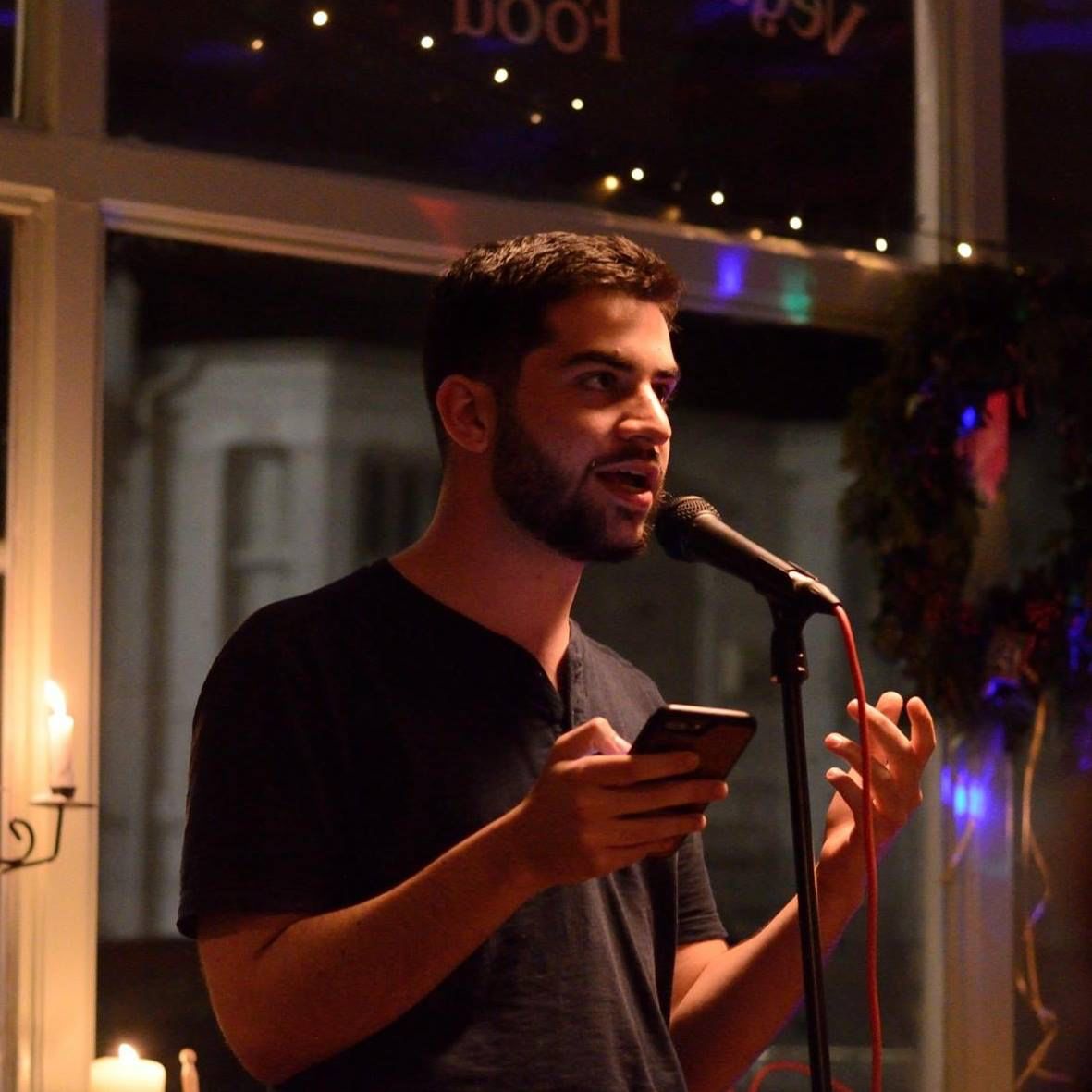
Jeremy Pitt
Legal Personhood and the ‘Right to ALife’ in Inter-Organisational Socio-Technical Systems
Abstract: The talk proposes a socio-technical imaginary to explore the implications of including agentic ALife in socio-technical systems that cross organisational boundaries. In these systems, the ‘socio’ components can be both humans (natural life, or NLife) and agentic computational processes (artificial life, or ALife). These inter-dependent components then use the same ’technical’ substrate (‘dumb’ machines, tools, services, etc.) to interact through a shared signalling system, according to the same mutually-agreed institutional rules, recognising the same inter-organisational roles, structures, and processes. In these systems, at a time when a credible political party to form a future UK government proposes to withdraw from the European Convention on Human Rights (ECHR), and in the context of Norbert Wiener’s “the human use of human beings’’, we maintain that the needs of human factors, user experience and NLife rights are paramount. Nevertheless, it is also necessary to consider issues of legal personhood for ALife, even up to a “right to ALife’’, especially in the context of possible conflicts between NLife and ALife, and between process persistence and environmental pressures. We conclude with a discussion of how this systemic lens could lead to a pre-emptive reframing of the problems in representing, reasoning about and enforcing both NLife and ALife rights, should this socio-technical imaginary come to be realised.

Hiroki Sayama
High-Resolution Agent-Based Modeling of Campus Population Behaviors for Pandemic Response Planning
Abstract: This talk introduces a case study of an application of high-resolution agent-based modeling and simulation to pandemic response planning on a university campus. In the summer of 2020, we were tasked with a COVID-19 pandemic response project to create a detailed behavioral simulation model of the entire campus population at Binghamton University. We conceptualized this problem as an agent migration process on a multilayer transportation network, in which each layer represented a different transportation mode. As no direct data were available about people’s behaviors on campus, we collected as much indirect information as possible to inform the agents’ behavioral rules. Each agent was assumed to move along the shortest path between two locations within each transportation layer and switch layers at a parking lot or a bus stop, along with several other behavioral assumptions. Using this model, we conducted simulations of the whole campus population behaviors on a typical weekday, involving more than 25,000 agents. We measured the frequency of close social contacts at each spatial location and identified several busy locations and corridors on campus that needed substantial behavioral intervention. Moreover, systematic simulations with varying population density revealed that the effect of population density reduction was nonlinear, and that reducing the population density to 40-45% would be optimal and sufficient to suppress disease spreading on campus. These results were reported to the university administration and utilized in the pandemic response planning, which led to successful outcomes.

Kirsten Wright
The Architecture of Thriving: What Co-operatives Reveal About Organizational Form and System Dynamics
Abstract: An economy can contain millions of organizations and still behave like a monoculture: if they depend on the same finance, optimize the same metrics, and respond to shocks in the same way, apparent diversity can mask a remarkably narrow repertoire of responses.
Artificial Life and complex systems suggest a different way of seeing this problem. The adaptive capacity of a system need not reside in any one component; it can be distributed across differentiated parts that sense, respond, buffer, store, experiment, and persist in different ways. The corresponding question for an economy is not simply how well its organizations adapt, but what repertoire of responses the organizational ecology retains when conditions change.
Co-operatives provide one example of the kind of institutional variation that can matter. Different organizational architectures implement different response functions. Governance, ownership, financing, purpose, and time horizon affect what an organization senses, which consequences enter its decisions, where shocks are absorbed, how surplus is allocated, and what it preserves when conditions deteriorate. Co-operative, competitive, public, commons-based, and other forms can therefore contribute different capacities to the larger system. Their value may lie partly in this functional diversity: preserving alternative responses, reducing the synchronization of failure, and keeping capabilities and possibilities available that a more homogeneous ecology might lose.
But maintaining possibilities is only part of the story. Generativity concerns the capacity of organizational activity to create new ones: to leave other people, organizations, places, and ecosystems more capable of acting, adapting, and creating than they were before. Organizations can buffer shocks and carry capabilities through time, but they can also build relationships, knowledge, infrastructure, and other conditions from which further possibilities emerge. I use evidence from co-operatives and a simple dynamical model to show how the same shock can produce very different outcomes depending on the organizational system through which it travels.
This reframes the problem of organizational design. The question is not simply which organizations survive, but what ecology of organizational forms preserves adaptive capacity across scales while expanding what the system is capable of becoming. If thriving is, in part, the continuing production of worthwhile possibility, then institutional diversity may be one of the architectures through which that possibility is both protected and produced.
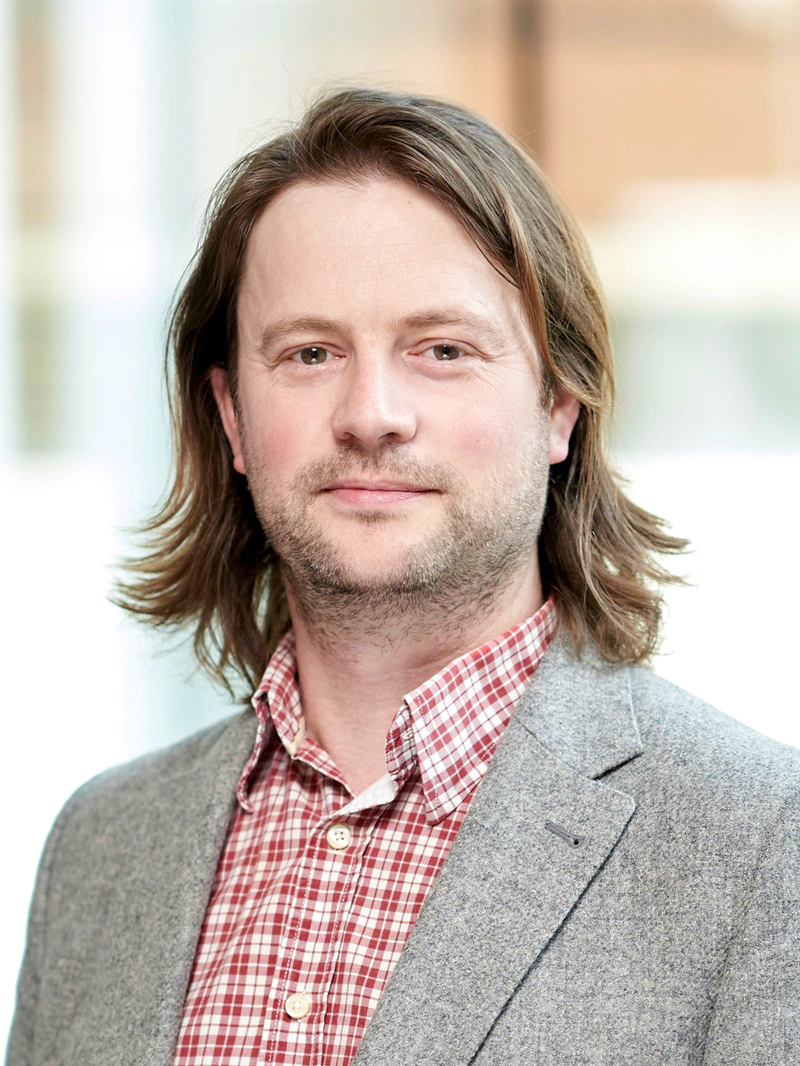
Peter R. Lewis
Reimagining Digital Public Spaces and Artificial Intelligence for Deep Cooperation
Abstract: If the digital spaces where communities gather are owned privately, then how might space be perceived as a public good? What are the limits of self-organization in private spaces, both digital and physical? While contemporary digital spaces typically present opportunities for richer and more accessible self-organization, they can also subtly change relations, perceptions, and boundaries, leading to limitations, risks, and missed opportunities. In this talk, I will invite the audience to reimagine digital public spaces through decentralization and deep cooperation, providing a case study to support this thesis from an ongoing project with a community of inner-city nurses. The talk will explore notions of social capital, empowerment, ownership, power, and affordances with respect to expectations of rights (of collective action, self-determinism, democracy, and so on). Drawing on the example of self-organization to tackle food insecurity, the talk will conclude by identifying opportunities for a more public-space-oriented use of intelligent systems, in support of collective action, built on Artificial Life principles.